DEI Isn’t New – It’s American
Diversity, equity, and inclusion didn’t appear overnight – and they certainly didn’t originate in modern boardrooms. Long before DEI became a political flashpoint, it functioned as a response to exclusion embedded in American law, labor, education, and civic life.
Across U.S. history, periods of expanded rights have often been followed by backlash: Reconstruction, desegregation, women’s suffrage, labor protections. The current debate around DEI fits squarely into this pattern. What we now label “DEI” is best understood not as a trend, but as a recurring attempt to reconcile the nation’s stated ideals with lived reality.
Understanding that continuity matters — especially when contemporary conversations reduce DEI to a slogan rather than a historical process.
What DEI Actually Means (Briefly)
ACLU breaks down each part of the guideline
At its core, DEI describes how institutions respond to difference — and whether they do so fairly.
Diversity — Who is present. Representation across race, gender, disability, class, and identity so institutions reflect the communities they serve.
Equity — Whether systems are fair. Identifying and dismantling barriers that produce unequal outcomes.
Inclusion — Who gets to participate meaningfully. Ensuring people are not merely present, but able to contribute without fear of discrimination or bias.
Accessibility — Whether barriers are removed. Addressing physical, technological, and systemic obstacles so participation is possible in practice, not just in theory.
These principles are not abstract. They show up wherever power, opportunity, and resources are unevenly distributed.
DEI in Practice: Where History Meets Policy
In the workplace, modern DEI initiatives – from anti-discrimination laws to parental leave and pay equity – trace their lineage to earlier labor reforms that sought to curb exploitation and exclusion. These policies emerged not to grant advantage, but to correct imbalances baked into hiring, compensation, and promotion systems.
In education, classroom accommodations, desegregation efforts, and protections against harassment stem from long-standing fights over who deserves access to learning – and on what terms. The goal has consistently been to create environments where students can engage fully without being penalized for identity or circumstance.
In the military, DEI policies reflect a long reckoning with discriminatory restrictions that barred qualified individuals from service based on race, gender, or sexual orientation. Integration and equal treatment were not departures from merit – they were prerequisites for it.
In each case, DEI represents an institutional response to documented inequity, not a departure from fairness.
A Longer History Than We Admit

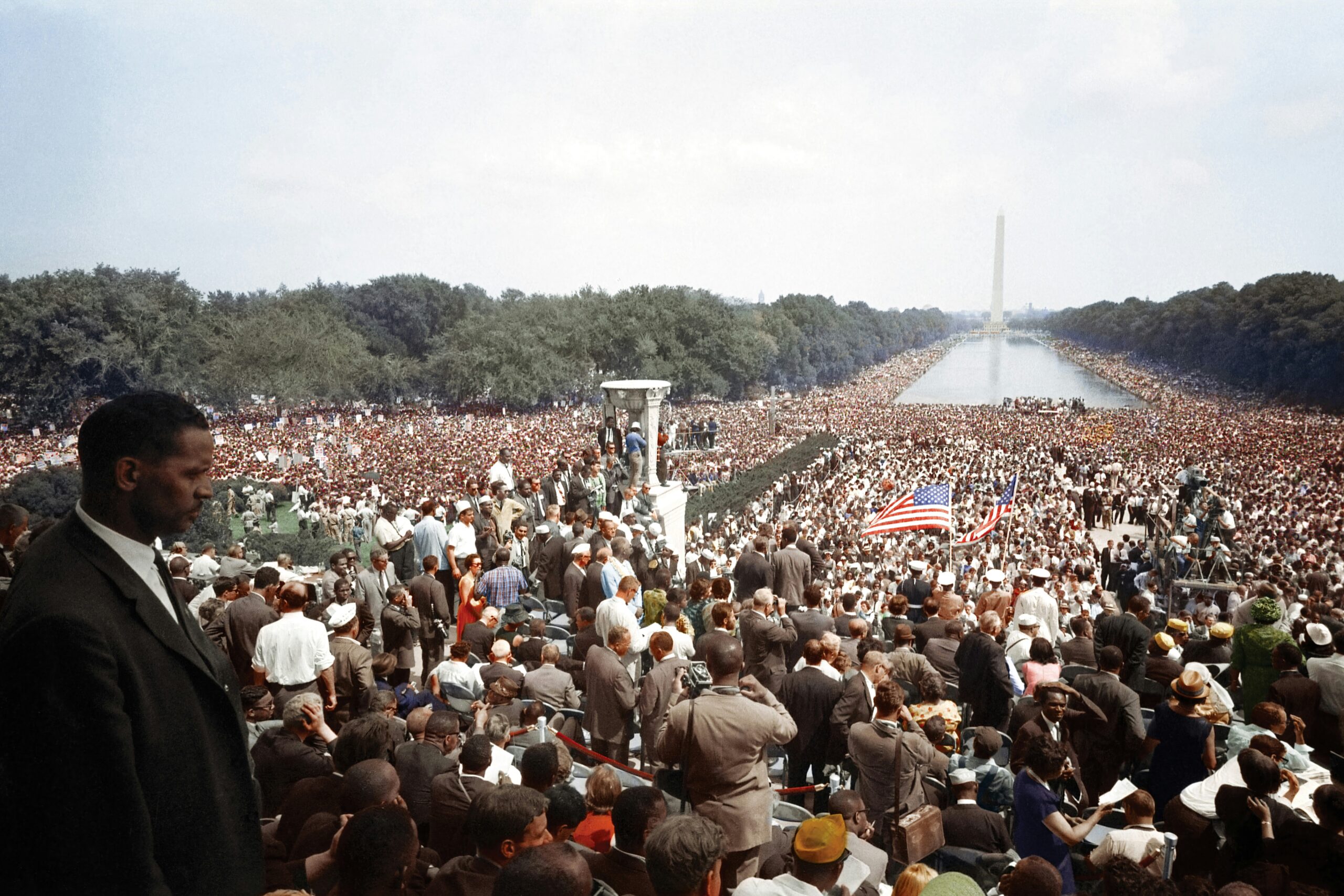
While the Civil Rights Movement of the 1960s formalized many protections, the principles behind DEI appear repeatedly throughout American history – often emerging, receding, and re-emerging in response to social pressure.
The end of the Civil War abolished slavery, but Reconstruction revealed how quickly progress could be undermined by fear-driven restrictions. Similar anxieties surface whenever inclusion expands: concerns over loss, displacement, or perceived unfairness.
These reactions are not new. They are the counterweight that makes reform necessary
Subsequent laws, such as Title IX and the Americans with Disabilities Act, have further reinforced our commitment to civil rights, addressing gender equality and disability rights.

Case in Point: A Pattern in Law
Civil Rights Act of 1866 — Defined U.S. citizenship and established equal legal protection regardless of race.
19th Amendment (1920) — Expanded voting rights to women while exposing racial exclusions that persisted for decades.
Fair Labor Standards Act (1938) — Addressed economic inequity through minimum wage, overtime protections, and child labor laws.
Women’s Armed Services Integration Act (1948) — Recognized women as permanent members of the military while maintaining restrictive limits.
Executive Order 9981 (1948) — Ended segregation in the armed forces, affirming equal treatment within federal institutions.
Brown v. Board of Education (1954) — Declared segregated public schools unconstitutional, reshaping access to education.
Each measure marked progress — and each was met with resistance. None resolved inequity entirely, but all moved the boundary of inclusion.

Why DEI Keeps Reappearing
DEI is not a modern invention, nor is it a finished project. It reflects a recurring American tension: who belongs, who decides, and how broadly rights are applied.
The language may change. The institutions may change. The conflict does not.
Understanding the history of DEI does not require agreement on every policy. It does, however, require acknowledging that progress has rarely occurred without deliberate effort — and that equality has never sustained itself without protection.
DEI persists not because it is fashionable, but because the conditions that made it necessary have never fully disappeared.
Related history: The Women’s Suffrage Movement and the Uneven Road to Inclusion
Disclosure: Some recommended reading links are Amazon affiliate links. If you choose to purchase through them, it helps support Off Beat History at no additional cost to you. Books are only included when they directly support the research and storytelling in the article.
History rarely ends on the page — these works dig deeper into the story.
Parting the Waters by Taylor Branch
A detailed account of the Civil Rights Movement that emphasizes strategy, power, and backlash rather than inevitability. Epic in scope and impact, Branch’s chronicle definitively captures one of the nation’s most crucial passages.
The Color of Law by Richard Rothstein
Demonstrates how segregation was shaped by government policy, not accidental social patterns.
How to Be an Antiracist by Ibram X. Kendi Professor Kendi weaves an electrifying combination of ethics, history, law, and science with his own personal story of awakening to antiracism. Examines antiracism as an active practice, not a label
Between the World and Me by Ta-Nehisi Coates A personal narrative that connects historical structures of race to lived experience without turning didactic. Thoughtfully exploring personal and historical events, from his time at Howard University to the Civil War, the author poignantly asks and attempts to answer difficult questions that plague modern society.
Stamped from the Beginning by Ibram X. Kendi
A historical study of how racist ideas developed alongside American institutions. In this deeply researched and fast-moving narrative, Professor Kendi chronicles the entire story of anti-black racist ideas and their staggering power over the course of American history.
Women, Race, & Class by Angela Y. Davis Connects feminist movements, labor struggles, and racial inequality into a broader historical framework.
References
Conway, Kim, Kellen, Zeng, Ricardo, Mimbela. “Diversity, Equity, Inclusion, and Accessibility Policies.” ACLU. 27 Feb 2025. https://www.aclu.org/news/racial-justice/dei-and-accessibility-explained
“How History Has Shaped Racial and Ethnic Disparities.” KFF. https://www.kff.org/how-history-has-shaped-racial-and-ethnic-health-disparities-a-timeline-of-policies-and-events
Kratz, Julie. “DEI Backlash, 4 Legitimate Concerns to Avoid.” Forbes. 25 Aug 2024. https://www.forbes.com/sites/juliekratz/2024/08/25/dei-backlash-4-legitimate-concerns-to-avoid/
“Declaration of Independence.” National Archives. Last Updated 16 May 2025. https://www.archives.gov/founding-docs/declaration-transcript
Leave a Reply