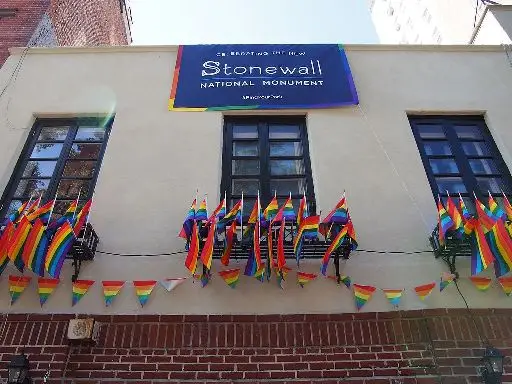
The iconic Stonewall uprising of June 1969 is often painted as a flash of rebellion. However, beneath that pivotal moment lies a tapestry of overlooked stories—of early activists, underground networks, and the quiet courage of those who refused to be erased. Their experiences remind us that Pride Month isn’t simply a celebration; it‘s a testament to resilience – a complex history born from struggle, and an unwavering refusal to remain silent. Before the world saw Pride, the world had to see queer people – and that took organizing, courage, and a refusal to disappear.
Pride in the Shadows: Surviving and Resisting in the Pre-Stonewall Era
The LGBTQ+ community has faced centuries of discrimination and marginalization. In the 19th century, science labeled homosexuality as a mental illness, fueling widespread persecution. By 1935, the American Psychological Association claimed success in “treating” homosexuality through methods like electroshock therapy – practices rooted in harmful stereotypes and pseudoscientific beliefs. Meanwhile, transgender and gender non-conforming individuals faced arrest simply for wearing clothing deemed inappropriate for their assigned sex. Being openly LGBTQ+ often meant risking jobs, housing, and family connections; bars and public spaces were hostile environments where concealment was survival.

The interior of the Stonewall Inn, a shadowy speakeasy from a bygone era, reflected its rough-and-tumble reality. The walls were painted black to hide the scars of fires, and the bar lacked even basic amenities; no running water for washing glasses, no fire escape to escape the chaos outside. It was run by the mafia, who overcharged for watered-down drinks and the staff often blackmailed wealthier patrons.
Despite these grim conditions, it was one of the few places in New York City where the LGBTQ+ community could find refuge, a space that, unlike most others, allowed dancing, music, and a moment of freedom.
Now, flash forward to late June 28, 1969 – a sticky summer night that would change everything. Inside the Stonewall Inn, the patrons already knew the routine. Police raids on gay bars were routine, driven by moral panic and legal harassment, but tonight, something felt different. As the officers stormed in, the air thick with anticipation, everyone sensed that this night was about to break the silence that had suffocated them for so long.
Gay bars were routinely raided – sometimes with warning, sometimes without – because patrons rarely made it easy for the police to catch them off guard. When officers arrived, they’d flip on the lights, line up everyone against the walls, and begin their checks. If you didn’t have proper ID, or weren’t wearing at least three pieces of gender-affirming clothing, arrest was almost certain. Stonewall, with its vibrant mix of drag queens, lesbians, trans women of color, gender non-conforming folks, and queer youth, was an obvious target. Its patrons’ refusal to hide who they were, to conceal their identities or play by the rules of societal decay, made it a lightning rod for police harassment, a place where resistance and resilience collided in a battle for survival.

The Spark That Lit the Pride Movement
On the night of June 28, 1969, there was no warning. No lights flicked on ahead of time, no signs of an impending raid. When the officers stormed in, the usual chaos was absent; no immediate warnings. As police began arresting patrons, a small crowd had already gathered outside, tense, restless, and fed up with years of injustice. When officers tried to escort a patron to a wagon, a scuffle broke out. In the chaos, some people were knocked down, fueling the anger of bystanders. The night spiraled quickly into something more than just a routine raid; an eruption of frustration that couldn’t be contained.
The bar’s regulars, many of whom had been quietly living in fear for years, understood what was really happening. They knew these raids weren’t just about shutting down a bar – they were tools of societal control, weapons used to silence and suppress their very existence. That night, beneath the flashing lights and shouting voices, they fought back – not just against the police, but against a society that wanted them erased.

Outnumbered and overwhelmed, the police barricaded themselves inside the bar, while outside, about five hundred people refused to disperse. Shouts of “gay power” and “we shall overcome” echoed the deep frustration of the crowd – people who had endured police harassment, societal rejection, and invisibility for far too long, now fighting back with a fierce, unyielding spirit.
“Why should we keep hiding?” someone shouted, voice trembling with a potent mix of fear and fury. That simple question, charged with raw emotion, hung in the air – an unspoken challenge that ignited a spark. Bottles and bricks flew through the night, a chaotic dance of anger and desperation.
The crowd pushed back—not just physically, but psychologically.
Marsha P. Johnson
Some accounts say that overwhelmed and frightened backup police officers retreated into the night, chased by a mob that refused to be silenced. Others remember hours of shouting, fighting, and standing their ground until dawn broke over the streets. This wasn’t an organized protest with leaders and speeches; it was raw, visceral resistance – a collective act of defiance against erasure. People fought back because they had no other choice. They had been quietly enduring the pain of exclusion, living on the margins of society, their very existence pushed into the shadows of what it meant to be human.
That night, the streets blazed with a fierce declaration: “We’re not going back in the closet.” It marked the beginning of a global movement for LGBTQ+ rights, transforming a spontaneous riot into a symbol of resilience and resistance. From the fire and chaos of that night, Pride was born—not merely as a celebration, but as a radical act of reclaiming identity, defying societal norms, and demanding acknowledgment. It marked a turning point: a fierce assertion that love, gender, and identity deserved to be seen and celebrated without apology.

In the days that followed, stories of that night spread like wildfire, inspiring a new wave of activism. The rebellion outside Stonewall wasn’t just about one bar or a single raid – it was about reclaiming identity, smashing through societal norms, and shouting loud and clear that love and gender diversity could no longer be hidden in the shadows.
It was a bold, unapologetic declaration: we exist, we matter, and we will no longer be erased.
Sylvia Rivera
The Quiet Rebellions: Queer Organizing Before Stonewall
What sparked the riot wasn’t just the raid itself but a long-standing accumulation of injustice, years of police brutality, arrests, and societal shame imposed on LGBTQ+ people, especially marginalized groups like transgender women of color. Behind the scenes, organizers and activists, like Marsha P. Johnson and Sylvia Rivera, had been working tirelessly underground, often risking their lives, to build a movement that could challenge the status quo. Their efforts laid the groundwork for what was to come; a fierce fight for visibility, dignity, and liberation.
But long before Stonewall, there were other bold steps toward change. The Reminder Day Pickets were among the earliest marches advocating for LGBTQ+ rights. Organized by the Eastern Regional Conference of Homophile Organizations (E.R.CH.O.), these protests were carefully timed and strategically placed to draw attention. Held on July 4th, right after the Independence Day parade in Pennsylvania, they took place in front of Independence Hall and the Liberty Bell – symbols of freedom and liberty. It wasn’t accidental. Their choice of location and timing was deliberate, aimed at confronting the nation’s celebration of freedom by exposing its hypocrisy and demanding that the ideals of liberty truly include all identities.
What’s remarkable about those early marches is just how much they echoed the societal expectations of the time. Participants dressed in their best suits and dresses, marching in orderly lines, they avoided holding hands or showing affection – anything that might be seen as “offensive” or “inappropriate” to the wider world. They tried to blend in, to appear as “respectable” as everyone else – an act of quiet resistance, a calculated effort to show that LGBTQ+ people were just like anyone else, deserving of dignity and respect.
When Pride Was a Protest: Stonewall and Its Predecessors
But by 1969, just a week after a police raid in New York City, that spirit of respectability was starting to crack. About fifty people from NYC chartered a bus to Philadelphia for the annual protest, swelling the crowd to around one hundred and fifty. Fueled by anger and frustration, they decided to make a different kind of statement – no longer hiding behind the veneer of decorum. This time, they refused to be invisible, to be silenced. They were ready to stand tall, loud, and proud, challenging the very norms they’d once tried to fit into. Instead of dressing “appropriately” or trying to appear non-offensive to bystanders, they openly held hands and defied the decorum that had governed the Pickets and their lives. Their frustration over the treatment of the LGBTQ+ community was palpable, and they sought liberation rather than mere equality.
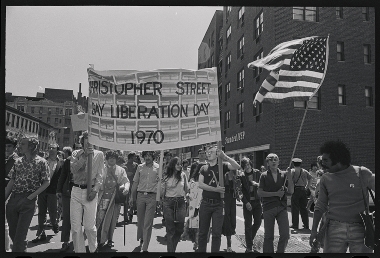
These early steps weren’t just about remembrance; they were about forging a future where love and identity could be embraced without apology, marking the beginning of a movement born from both hope and anger, rooted in the memory of Stonewall and fueled by the fierce desire for change.
That rebellious spirit carried over into the following year. The first Christopher Street Pride Parade in New York City replaced the Reminder Day Pickets, transforming the quiet march into a celebration of pride and defiance. It became a powerful statement: that LGBTQ+ identities deserved to be celebrated openly, with joy and resistance.
Symbols & Solidarity
That one summer night, in the midst of the chaos and resistance, a small but powerful group declared that they would no longer be invisible. The riot outside Stonewall became a beacon – an unplanned but necessary act of defiance that ignited a worldwide movement for LGBTQ+ rights.
Decades later, the stories of that night still echo. And so, from that fiery night, Pride was born, not just as a celebration, but as an enduring act of resistance that continues to ripple through history, reminding us that sometimes, it takes a riot to ignite change.

Disclosure: Some recommended reading links are Amazon affiliate links. If you choose to purchase through them, it helps support Off Beat History at no additional cost to you. Books are only included when they directly support the research and storytelling in the article.
To learn more about this pivotal moment
Stonewall: The Definitive Story of the LGBTQ Rights Uprising That Changed America by Martin Duberman
A foundational, in-depth history of Stonewall and early LGBTQ activism. Strong on social context, organizing, and the broader movement; includes a wide range of voices and perspectives
The Stonewall Reader (edited by the New York Public Library and the Stonewall National Monument) A collection of primary-source documents, letters, newspaper clippings, memoirs, and organizational materials. Helps readers hear voices from inside and around Stonewall, not just the retrospective synthesis
Stonewall: The Riots That Sparked the Gay Revolution by David Carter A detailed, readable narrative that emphasizes the sequence of events and the political significance of Stonewall within the gay rights movement.
Stonewall: Breaking Out in the Fight for Gay Rights by Ann Bausum Quoting from a variety of firsthand sources (journalists, bar patrons, cops, and others), Bausum paints a vivid picture of the three nights of rioting that became the focal point for activists, some of whom had been fighting for gay and lesbian rights in a quieter way and others who found themselves suddenly drawn to the struggle.
“Stonewall Inn State Historic Site.” New York State. https://parks.ny.gov/historic-sites/stonewallinn/details.aspx
“Stonewall Inn: Through the Years.” PBS. https://www.pbs.org/wgbh/americanexperience/features/stonewall-inn-through-years/
References
1. Drescher, Jack. “Out of DSM: Depathologizing Homosexuality.”Behav Sci (Basel). 2015 Dec 4;5(4):565-75. doi: 10.3390/bs5040565. https://pmc.ncbi.nlm.nih.gov/articles/PMC4695779/
2. NYC LGBT Historic Sites Project. “Stonewall Inn.” Accessed 15 June 2025. https://www.nyclgbtsites.org/site/stonewall-inn-christopher-park/
3. History.com Editors. “Stonewall Riots.” History. Updated 28 May 2025. https://www.history.com/articles/the-stonewall-riots
4. Brown, Carolyn. “Why Don’t You Guys Do Something?” The Culture Crush. Accessed 13 June 2025. https://www.theculturecrush.com/why-dont-you-guys-do-something
5. Blakemore, Erin. “What Was the Stonewall Uprising?” National Geographic. 1 June 2023. https://www.nationalgeographic.com/history/article/stonewall-uprising-ignited-modern-lgbtq-rights-movement
6. Historical Society of Pennsylvania. “Before Stonewall, A Reminder.” 9 July 2015. https://hsp.org/blogs/fondly-pennsylvania/before-stonewall-a-reminder
7. Manuscripts and Archives Division, The New York Public Library. “Christopher Street Liberation Day, 1970” New York Public Library Digital Collections. Accessed June 21, 2025. https://digitalcollections.nypl.org/items/5f5aaf50-11e2-0137-5516-132686a3a1de
Leave a Reply